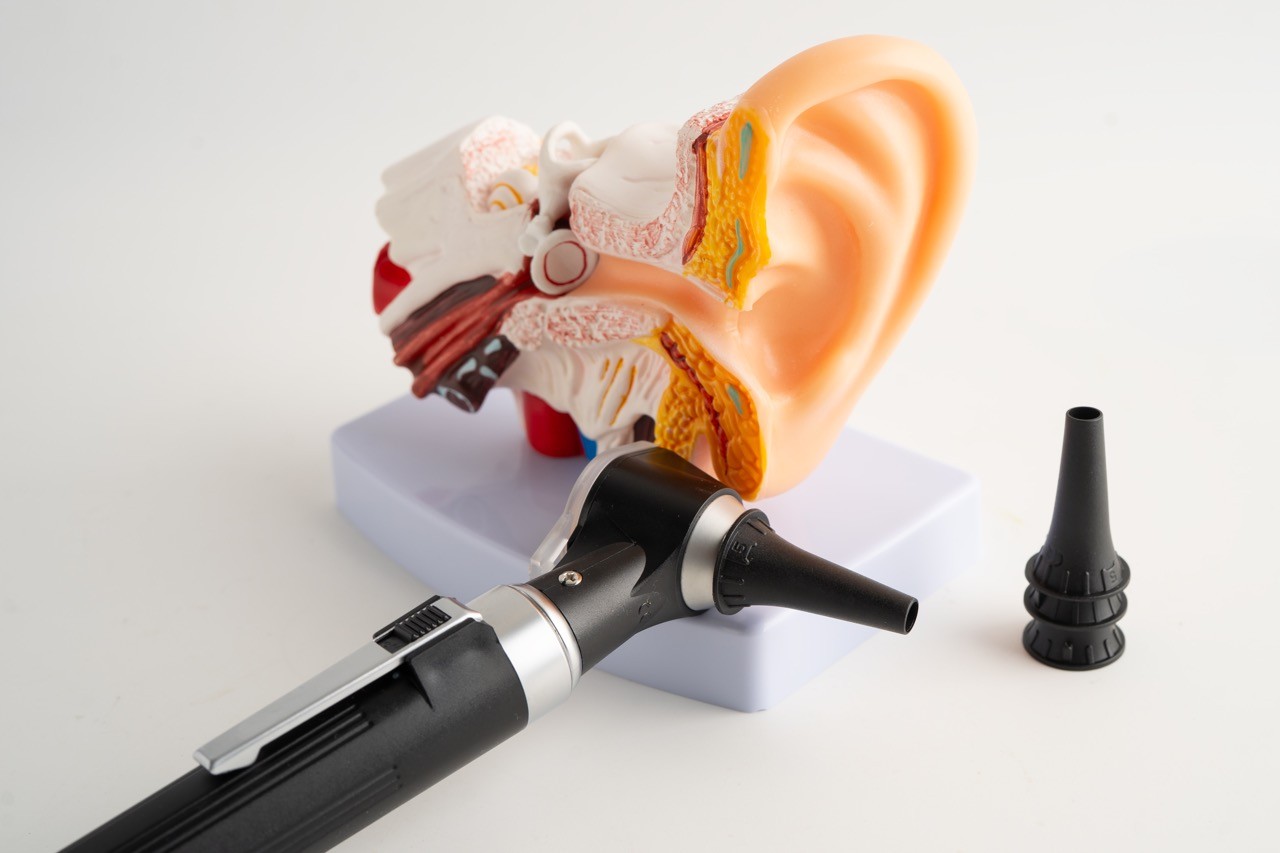
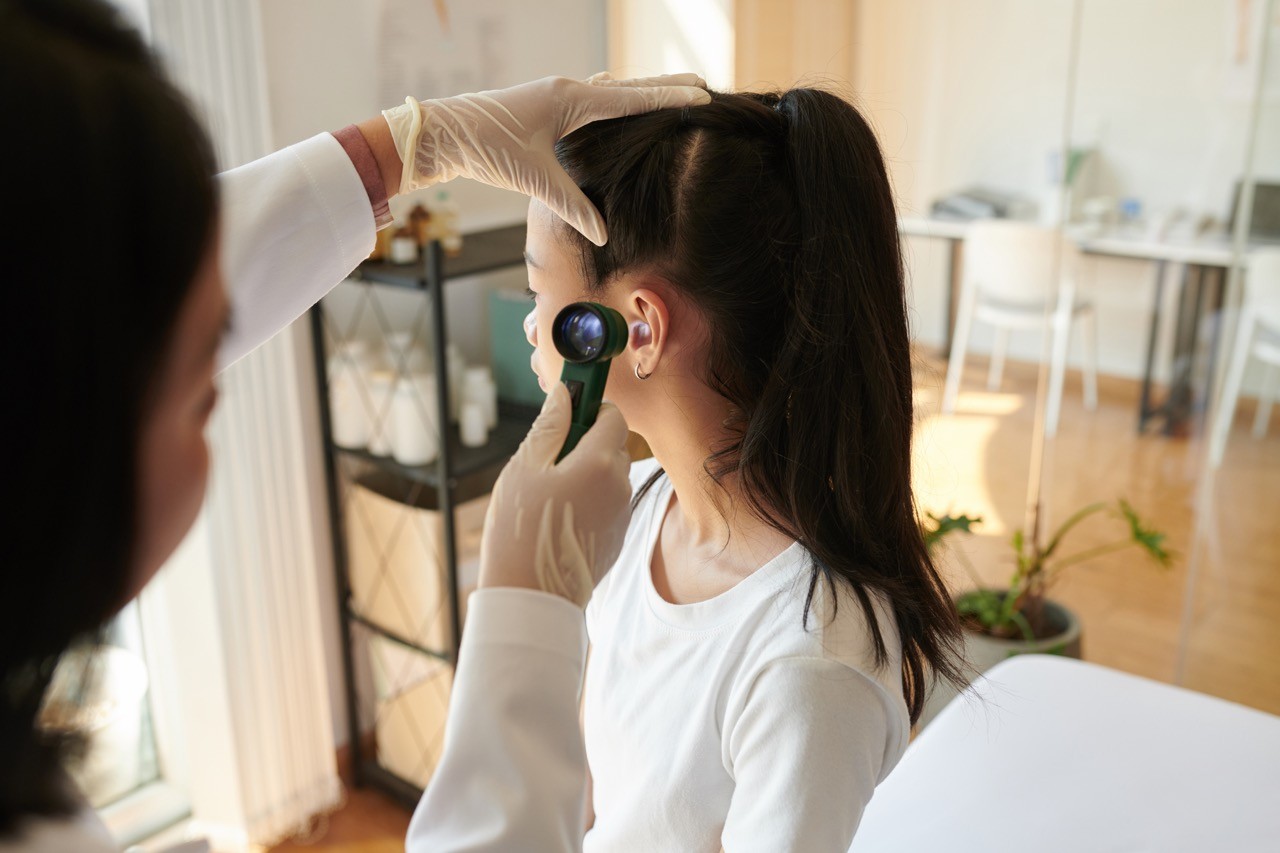
Between straightforward diagnostics and complex operations lies a broad spectrum of outpatient procedures. Paracenteses, grommet insertions, foreign body removals, or small biopsies are part of daily life in many ENT practices and day clinics. These procedures require a surgical microscope that is quick to set up, operates reliably, and offers the surgeon optimal visibility without disrupting the workflow.
Quick Setup
Only minutes often pass between procedures. The recommended microscopes can be repositioned and made ready for use in seconds.
Compact Design
Outpatient operating rooms are rarely spacious. The slim design of Kaps microscopes saves space without compromising on performance.
Reliability
In everyday practice, technology must work without lengthy maintenance intervals or complicated calibrations. Karl Kaps microscopes are built for continuous use.
Easy Operation
Intuitive adjustment options mean a short training period. Even practice staff can easily prepare the microscope for the next procedure.
Expandable
If the practice's surgical spectrum expands, the microscope grows with it. Camera adapters, assistant scopes or LED upgrades can be retrofitted at any time.
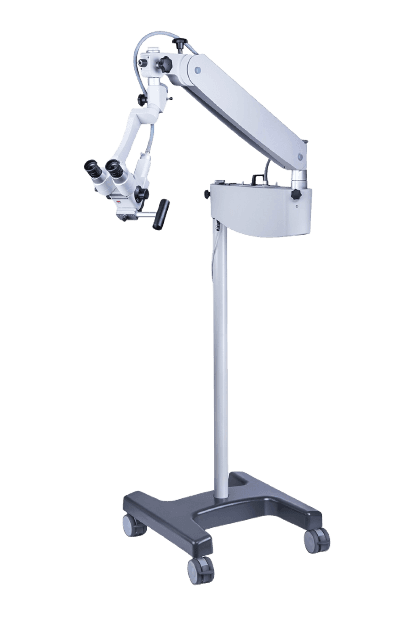
SOM 22 / SOM 32 / SOM 62
The SOM series offers the ideal balance between functionality and cost-effectiveness for outpatient procedures. The 5-position magnification changer allows for rapid switching between overview and detailed view. The cold light or LED lighting provides sufficient brightness for all standard procedures. The various mounting options (wall, ceiling, mobile stand) adapt to any room situation.
Technical key data SOM 22/32/62:
Magnification: 5-position apochromatic changer, optional 1:6 zoom
Lighting: Cold light 15V/150W or integrated LED
Swivel tube: 0-210° for ergonomic working position
Fine focusing: Optional up to 40mm
Green filter: Swing-in for vessel representation
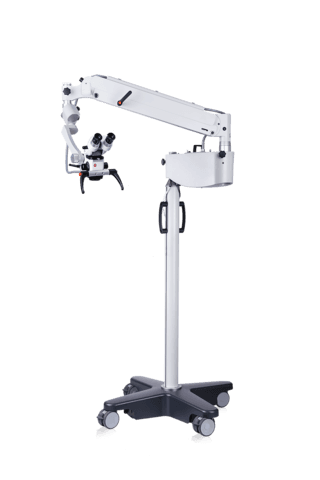
Pro ENT Manual
For practices with a higher surgical workload, the Pro ENT in its manual version is recommended. The 5-fold magnification changer or optional 1:6 zoom, combined with the apochromatic optics, delivers razor-sharp images. The compact design allows for a short working distance to the operating field. The mobile floor stand can be easily moved between treatment rooms.
Technical specifications Pro ENT Manual:
Magnification: 5-fold changer or manual 1:6 zoom
Lighting: LED standard, optional cold light 15V/150W or external xenon 180W
Objectives: f=200mm, optional vario-objective 200-400mm
Tubus: 45° coupling with balancing mechanism
Stand: Compact mobile floor stand or ceiling mount
Discover which microscope is best suited for each application

" height="23.911999999999992px" id="ciRDaKJH5" width="24px"/></svg>)
" height="24.001568659739974px" id="xPNhzvnO9" width="24.00000164526171px"/></svg>)
" height="15.756141176470578px" id="tPH3We2uY" width="24px"/></svg>)
" height="24px" id="zQPxYS9vz" width="24px"/></svg>)